1927 British Cartoon: CHURCHILL French War Debts POINCARE Franco-German Entente
$ 9.48
Description
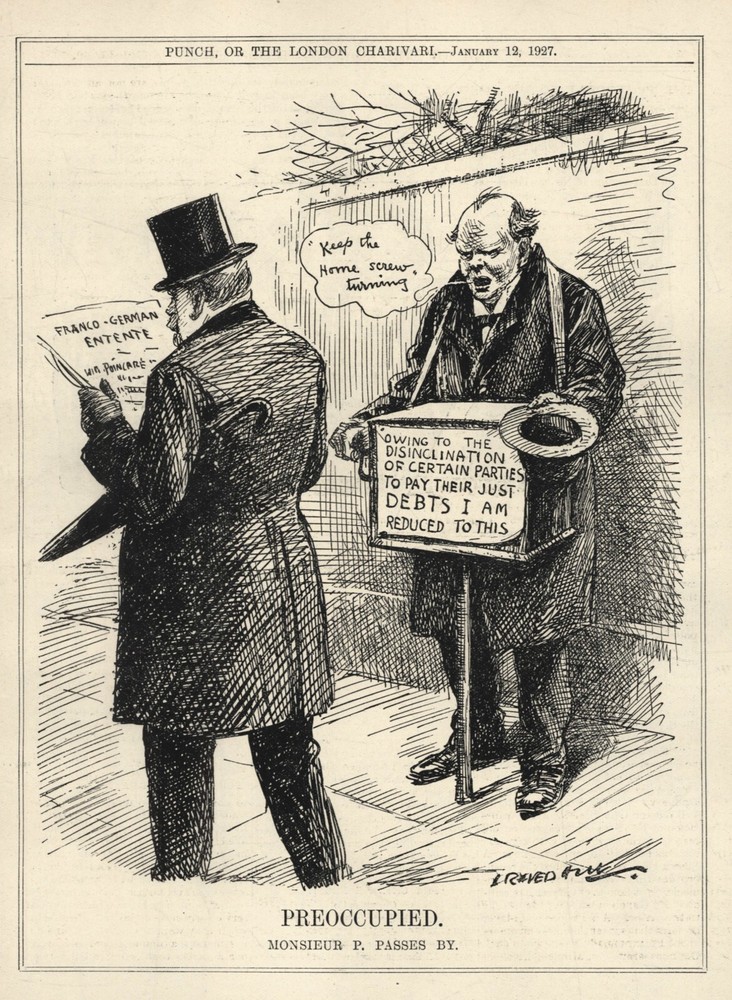
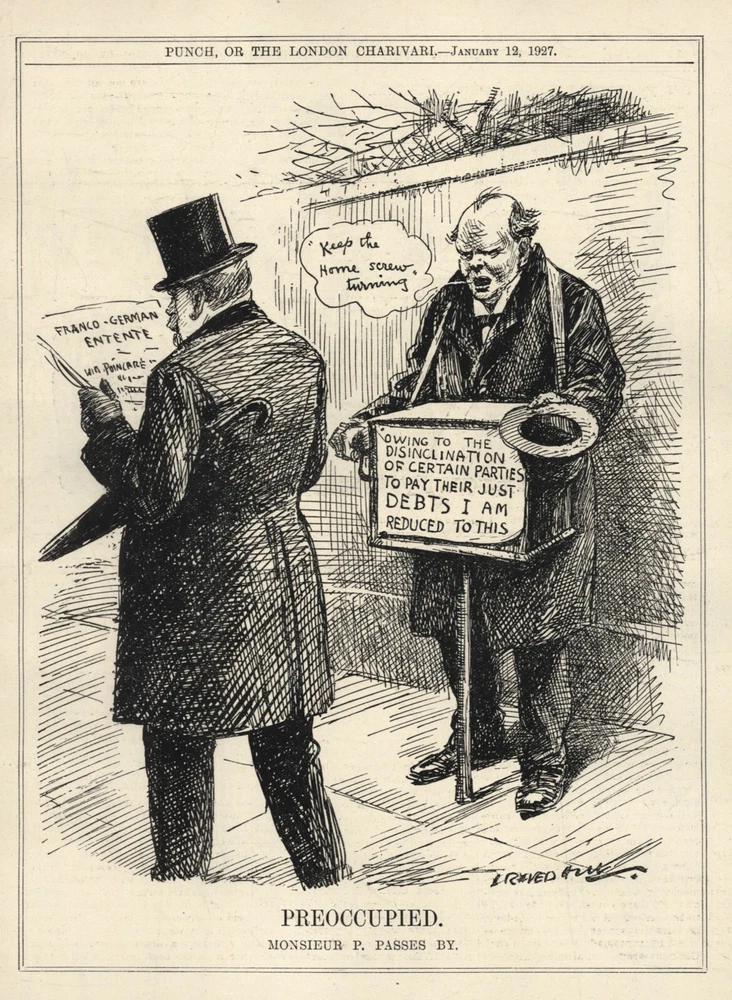
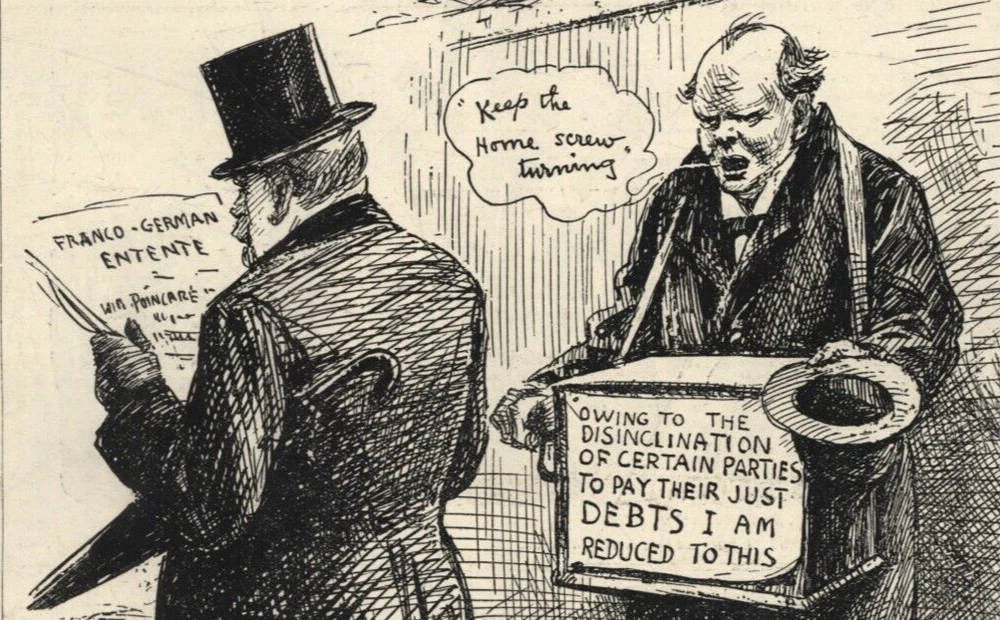
PREOCCUPIED. Monsieur P passes by. + Cartoon showing Winston Churchill begging in a street with a music box and the notice Owing To The Disinclination Of Certain Parties To Pay Their DEBTS I Am Reduced To This while singing Keep The Home Screw Turning as Raymond Poincare ignores him while reading the Franco-German Entente news headline. + Keywords: Weimar Republic, Germany, Churchill, Chancellor of Exchequer, “Keep the Home Fires Burning,” Frano-German Entente, musical reference, hurdy gurdy, buskers, beggars, Conservative Party. + “Churchill as an organ-grinder trying to raise funds, complaining that France is not paying its war debts. Monsieur P. is French Prime Minister Raymond Poincare. The irony of his news paper headline makes WSC’s consternation even greater.” [from “Churchill in Punch” by Gary L. Stiles.] Source : British PUNCH humor/satire magazine , January 12, 1927 original, pulled from the magazine, not a modern reproduction. Illustrated by L. Raven-hill (excellent). Size 8 1/2 x 11" (approximately) Condition : excellent -- minor toning, remains clean; in addition, the page has been humidified and flattened for best appearance and for framing; the backside has unrelated text with some possible show-through on the facing side, as published -- please look closely. Over 5,000 Punch cartoons listed for sale (store category "Punch cartoons") -- humor, satire and propaganda; combine orders and save shipping charges. Questions are always welcome. If buying more than one, please use 'Add to Basket' instead WHO IS THE ARTIST: Leonard Raven-Hill (10 March 1867 - 31 March 1942) was an English artist, illustrator and cartoonist. WHAT IS PUNCH? Punch , a magazine of humor and satire, ran from 1841-2002. A very British institution renowned internationally for its wit and irreverence, it helped to coin the term "cartoon" in its modern sense as a humorous illustration. Punch was the world's most celebrated magazine of wit and satire. From its early years as a campaigner for social justice to its transformation into national icon, Punch played a central role in the formation of British identity -- and how the rest of the world saw the British nation. In its formative years Punch combined humors, illustration and political debate with a fresh and radical audacity. During its heyday in the late 1800s, it reflected the conservative views of the growing middle-classes and copies of it could be found in the libraries of diplomats, cabinet ministers and even royalty. In the Western world, Punch played a significant role in the development of satire. In the world of illustration, it practically revolutionized it. Over the decades as it charted the interests, concerns and frustrations of the country and today it stands as an invaluable source of cartoon art, satire, but as primary source material for historians.