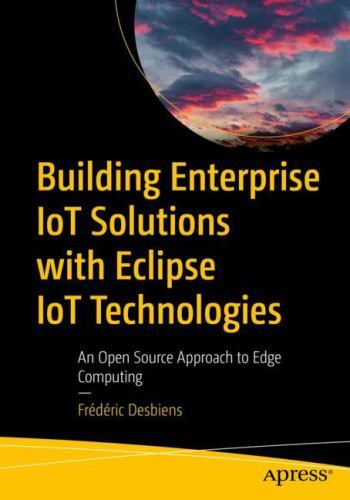
Build Enterprise IoT Solutions with Eclipse Open-Source Edge Computing by Frédéric Desbiens 2022 Paperback
$ 20.63
gtin13:
9781484288818
Subject:
Engineering (General), Programming Languages / Java, Networking / General
Synopsis:
Build IoT solutions for the enterprise using open-source building blocks from the Eclipse IoT Working Group at the Eclipse Foundation. This book introduces you to key protocols and their implementations, such as CoAP (Eclipse Californium), DDS (Eclipse Cyclone DDS), LwM2M (Eclipse Leshan), and MQTT (Eclipse Paho, Eclipse Mosquitto, and Eclipse Amlen). You will learn about Edge Computing platforms (Eclipse ioFog, Eclipse Kanto), IoT gateways (Eclipse Kura, Eclipse Kapua), and next-generation edge native protocols (Eclipse zenoh).The book also covers production-ready platforms for digital twins (Eclipse Ditto), energy management (Eclipse VOLTTRON), contactless payments (Eclipse Keyple), and much more. Although the book discusses hardware matters, its focus is on software and relevant open standards. The book helps you understand the pros and cons of the technologies available from Eclipse IoT and how they have been used in actual deployments. The examples provided cover a variety of use cases, such as industrial automation, smart agriculture, digital buildings, robotics, and others. The book's contents follow a reference architecture encompassing constrained devices (things), edge devices (gateways, servers), and IoT Cloud platforms. For each of those three pillars, you will learn about relevant open-source components. Usage of code libraries and frameworks is explained through code samples. You will also learn how to deploy and configure platform-type components and how to leverage them. Special attention will be paid to security and edge computing throughout the book. What You Will Learn Describe in your own words the main software components required in an IoT architecture Select the appropriate IoT protocols, components, frameworks, and platforms for a specific project Evaluate the connectivity options at your disposal and select the most appropriate ones Explain the value of business models focused on open-source components and deploy such models in your organization Determine if edge computing is relevant to a project and deploy the relevant components on an edge computing platform Build Enterprise IoT solutions leveraging an array of open-source components and platforms using popular languages such as C, Java, and Rust Who This Book Is For Developers new to enterprise IoT who want to learn about fundamental technologies for that market segment and seek an introduction to relevant, open-source building blocks; experienced IoT developers who seek alternatives to the proprietary platforms they are currently using; software architects designing IoT solutions who want to understand open-source technology options
Number of Pages:
Xxviii, 364 Pages
LC Classification Number:
TK5105.8857
Illustrated:
Yes
Publication Name:
Building Enterprise IoT Solutions with Eclipse IoT Technologies : An Open-Source Approach to Edge Computing
brand:
Apress L. P.
Format:
Trade Paperback
Number of Volumes:
1 vol.
Subject Area:
Computers, Technology & Engineering
Table Of Content:
Part I. Fundamentals and Protocols.- 1. What is IoT?.- 2. CoAP.- 3. LwM2M.- 4. MQTT.- 5. Sparkplug.- 6. DDS.- 7. zenoh.- Part II. Constrained Devices.- 8. The Hardware.- 9. Connectivity.- 10. Operating Systems.- Part III. Edge Computing and IoT Platforms.- 11. Edge Computing.- 12. Applications.- 13. Integration and Data.- 14. Conclusion.
Item Weight:
26.2 Oz
Type:
Textbook
Dewey Decimal:
004.678
Dewey Edition:
23
Publisher:
Apress L. P.
Item Width:
7 in
Item Length:
10 in
Language:
English
ISBN-10:
1484288815
Publication Year:
2022
ISBN-13:
9781484288818
Author:
Édéric Desbiens
This book is a fantastic resource for anyone diving into IoT development with Eclipse technologies! Frédéric Desbiens breaks down complex edge computing concepts into clear, actionable steps. The open-source approach makes it practical for real-world enterprise solutions. Packed with useful examples and insights, it's perfect for developers looking to build scalable IoT systems. Highly recommended for both beginners and experienced pros!