Perils of Partnership : Industry Influence, Institutional Integrity, and Publ...
$ 18.91
Description
Perils of Partnership : Industry Influence, Institutional Integrity, and Public Health, Hardcover by Marks, Jonathan H., ISBN 0190907088, ISBN-13 9780190907082, Brand New, Free shipping in the US Countless public health agencies are trying to solve our most intractable public health problems -- among them, the obesity and opioid epidemics -- by partnering with corporations responsible for creating or exacerbating those problems. We are told industry must be part of the solution. But is
it time to challenge the partnership paradigm and the popular narratives that sustain it?
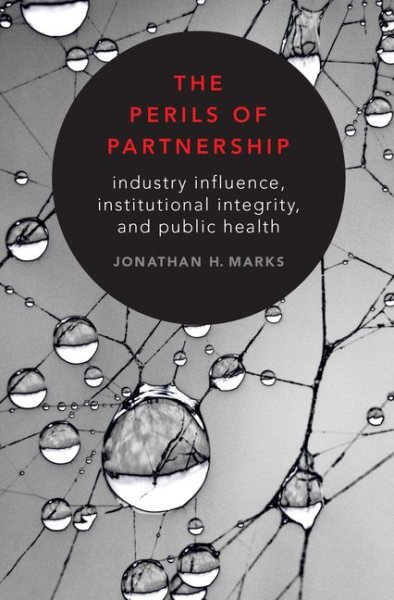
In The Perils of Partnership, Jonathan H. Marks argues that public-private partnerships and multi-stakeholder initiatives create "webs of influence" that undermine the integrity of public health agencies; distort public health research and policy; and reinforce the framing of public health problems
and their solutions in ways that are least threatening to the commercial interests of corporate "partners". We should expect multinational corporations to develop strategies of influence -- but public bodies can and should develop counter-strategies to insulate themselves from corporate influence in
all its forms. Marks reviews the norms that regulate public-public interactions (separation of powers) and private-private interactions (antitrust and competition law), and argues for an analogous set of norms to govern public-private interactions. He also offers a novel framework to help public
bodies identify the systemic ethical implications of their current or proposed relationships with industry actors.
Marks makes a compelling case that the default public-private interaction should be at arm's length: separation, not collaboration. He calls for a new paradigm that avoids the perils of corporate influence and more effectively protects and promotes public health. The Perils of Partnership is
essential reading for public health officials and policymakers -- but anyone interested in public health will recognize the urgency of this book.