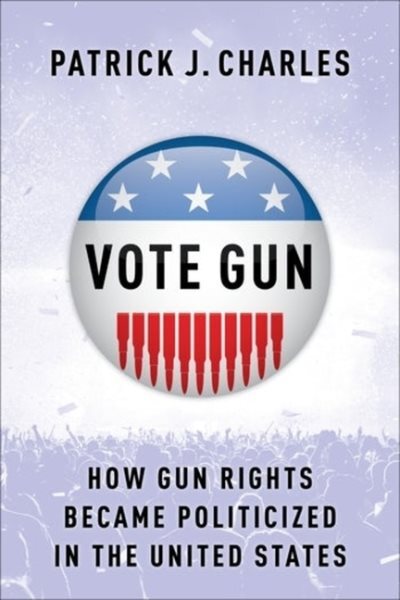
Vote Gun : How Gun Rights Became Politicized in the United States, Hardcover ...
$ 27.13
Description
Vote Gun : How Gun Rights Became Politicized in the United States, Hardcover by Charles, Patrick J., ISBN 0231208847, ISBN-13 9780231208840, Brand New, Free shipping in the US "After John F. Kennedy was shot and killed with a rifle purchased through a mail-order magazine, Congress enacted and President Lyndon B. Johnson signed into law the 1968 Gun Control Act (GCA), regulating firearms under interstate commerce. The politics of firearms controls suddenly underwent a formative transformation. Though the politics of firearms controls date as far back as the late nineteenth century, and though the first gun rights movement was actively lobbying lawmakers by the early to mid-twentieth century, it was not until the enactment of the GCA that lawmakers began to stake out any firm firearms control policy positions, and subsequently make these positions part of their election campaigns. From that point onward, lawmakers increasingly outlined their respective firearms control positions, and over time political coalitions began to form. Vote Gun tells the story of this transformation from the early twentieth century through the 1980 elections. However, most of th centers on the events immediately leading up to and following the GCA. Specific attention is given to how the passage of the GCA made firearms controls a wedge voting issue, as well as how three presidents-Richard Nixon, Gerald Ford, and Jimmy Carter-handled the issue of firearms controls politically. Th closes by examining how the 1980 elections cemented the partisan divisions over firearms controls that remain to this day"--