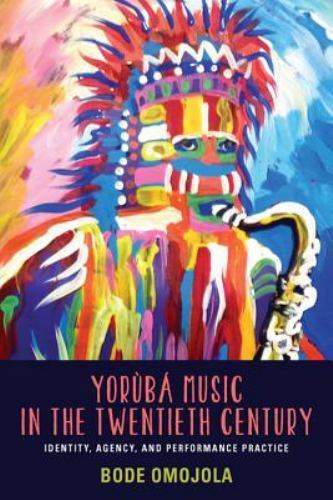
Yoruba Music in the Twentieth Century by Bode Omojola Identity Agency and Performance Practice

$ 28.43

Publication Name: Yor B Music in the Twentieth Century : Identity, Agency, and Performance Practice LC Classification Number: ML355 Type: Textbook Publication Year: 2014 Item Width: 6 in Subject: History & Criticism, Ethnomusicology, Genres & Styles / International, Ethnic Publisher: University of Rochester Medical Press Author: Bode Omojola ISBN-10: 1580464939 Table Of Content: Yor b Drumming: Performance Practice and the Politics of Identity Talking and Stammering: Toward an Analysis of Yor b Drumming Songs of the King's Wives: Gendered and Social Identities inYor b Vocal Performance The A r gb Song Tradition of Yor b Female Chiefs Yor b Music in the Christian Liturgy: Notation, Performance,and Identity Yor b Music in Christian Worship: The Al dur Church Yor b Popular Music: Hybridity, Identity, and Power Yor b Islamic Popular Music Conclusion Appendixes A: Fieldwork B: Audio Track List Dewey Edition: 23 Dewey Decimal: 781.629633300904 Item Length: 10.3 in Language: English gtin13: 9781580464932 Illustrated: Yes Format: Trade Paperback Item Height: 0.8 in Item Weight: 15.6 Oz Subject Area: Music Reviews: [N]o other book covers the variety of genres and idioms discussed in Yorùbá Music in the Twentieth Century . Professor Omojola's tactical choice of topics yields an in-depth yet broad treatment of the entire field of Yorùbá music. After a sophisticated discussion of 'identity' in the introduction, each chapter provides detailed, culturally insightful coverage of a different facet of this important musical tradition. A well-written, well-researched book of interest to a wide readership., A unique and refreshing take on the study of Yor b music, grounding a wide range of Yor b musical genres in Nigerian history as well as in the experiences of specific ensembles and artists . . . The sheer scope and goals of this project make it exciting., While most books on Yorùbá music focus on a single genre or instrument and betray either a musicological or anthropological bent, Omojola skilfully weaves together a broad range of musical topics, grounding each in rich ethnographic detail and rigorous musical analysis. . . . Although some of the topics are highly specialized, Omojola's book is broadly accessible and makes valuable contributions to scholarship on identity and African music . . . The author's crisp musical analyses and rich ethnographic descriptions give his theoretical arguments a satisfying concreteness. It is this same characteristic that makes the book thoroughly teachable, full of detailed examples ready for comparison with other world traditions. I would highly recommend it for advanced courses in ethnomusicology and musicology, as well for specialists in African music, literature, and history. --Jesse Ruskin [2014 YEARBOOK FOR TRADITIONAL MUSIC] Using a multi-disciplinary methodology that includes musical transcription and analysis, ethnographic field-work, historical research and biography, Omojola's book paints an expansive picture of modern Yoruban musical culture that acknowledges the role of individual as well as group agency . . . Omojola's ability to balance musical information obtained through transcription and analysis with ethnographic data is to be applauded, and serves as an example of the benefits of including information gleaned from both perspectives. WORLD OF MUSIC Very detailed, reflecting the author's two decades of research . . . Omojola's writing style is clear, concise, and thoroughly engaging . . . Highly recommended. CHOICE A unique and refreshing take on the study of Yorùbá music, grounding a wide range of Yorùbá musical genres in Nigerian history as well as in the experiences of specific ensembles and artists . . . The sheer scope and goals of this project make it exciting. LEEDS AFRICAN STUDIES BULLETIN [N]o other book covers the variety of genres and idioms discussed in Yorùbá Music in the Twentieth Century . Professor Omojola's tactical choice of topics yields an in-depth yet broad treatment of the entire field of Yorùbá music. After a sophisticated discussion of "identity" in the introduction, each chapter provides detailed, culturally insightful coverage of a different facet of this important musical tradition. A well-written, well-researched book of interest to a wide readership. --David Locke, Tufts University, [N]o other book covers the variety of genres and idioms discussed in Yor b Music in the Twentieth Century. Professor Omojola's tactical choice of topics yields an in-depth yet broad treatment of the entire field of Yor b music. After a sophisticated discussion of 'identity' in the introduction, each chapter provides detailed, culturally insightful coverage of a different facet of this important musical tradition. A well-written, well-researched book of interest to a wide readership., While most books on Yorùbá music focus on a single genre or instrument and betray either a musicological or anthropological bent, Omojola skilfully weaves together a broad range of musical topics, grounding each in rich ethnographic detail and rigorous musical analysis. . . . Although some of the topics are highly specialized, Omojola's book is broadly accessible and makes valuable contributions to scholarship on identity and African music . . . The author's crisp musical analyses and rich ethnographic descriptions give his theoretical arguments a satisfying concreteness. It is this same characteristic that makes the book thoroughly teachable, full of detailed examples ready for comparison with other world traditions. I would highly recommend it for advanced courses in ethnomusicology and musicology, as well for specialists in African music, literature, and history. --Jesse Ruskin [2014 YEARBOOK FOR TRADITIONAL MUSIC] Using a multi-disciplinary methodology that includes musical transcription and analysis, ethnographic field-work, historical research and biography, Omojola's book paints an expansive picture of modern Yoruban musical culture that acknowledges the role of individual as well as group agency . . . Omojola's ability to balance musical information obtained through transcription and analysis with ethnographic data is to be applauded, and serves as an example of the benefits of including information gleaned from both perspectives. WORLD OF MUSIC Very detailed, reflecting the author's two decades of research . . . Omojola's writing style is clear, concise, and thoroughly engaging . . . Highly recommended. CHOICE A unique and refreshing take on the study of Yorùbá music, grounding a wide range of Yorùbá musical genres in Nigerian history as well as in the experiences of specific ensembles and artists . . . The sheer scope and goals of this project make it exciting. LEEDS AFRICAN STUDIES BULLETIN [NLETIN [NLETIN [NLETIN [N]o other book covers the variety of genres and idioms discussed in Yorùbá Music in the Twentieth Century . Professor Omojola's tactical choice of topics yields an in-depth yet broad treatment of the entire field of Yorùbá music. After a sophisticated discussion of "identity" in the introduction, each chapter provides detailed, culturally insightful coverage of a different facet of this important musical tradition. A well-written, well-researched book of interest to a wide readership. --David Locke, Tufts University, While most books on Yor b music focus on a single genre or instrument and betray either a musicological or anthropological bent, Omojola skilfully weaves together a broad range of musical topics, grounding each in rich ethnographic detail and rigorous musical analysis. . . . Although some of the topics are highly specialized, Omojola's book is broadly accessible and makes valuable contributions to scholarship on identity and African music . . . The author's crisp musical analyses and rich ethnographic descriptions give his theoretical arguments a satisfying concreteness. It is this same characteristic that makes the book thoroughly teachable, full of detailed examples ready for comparison with other world traditions. I would highly recommend it for advanced courses in ethnomusicology and musicology, as well for specialists in African music, literature, and history. --Jesse Ruskin [2014 YEARBOOK FOR TRADITIONAL MUSIC] Using a multi-disciplinary methodology that includes musical transcription and analysis, ethnographic field-work, historical research and biography, Omojola's book paints an expansive picture of modern Yoruban musical culture that acknowledges the role of individual as well as group agency . . . Omojola's ability to balance musical information obtained through transcription and analysis with ethnographic data is to be applauded, and serves as an example of the benefits of including information gleaned from both perspectives. Series Volume Number: 2 brand: University of Rochester Medical Press Intended Audience: Scholarly & Professional Number of Pages: 296 Pages Synopsis: Drawing on extensive field research conducted over the course of two decades, Bode Omojola examines traditional and contemporary Yorùbá genres of music. From the primeval age of Ayànàgalú (the Yorùbá pioneer-drummer-turned-deity-of-drumming) to the modern era, Yorùbá musical traditions have been shaped by individual performers: drummers, dancers, singers, and chanters, wself-mediated visions of their social and cultural environment. Yorùbá Music in the Twentieth Century explores the role of the performer and the performing group in creating these traditions, contributing to the ongoing reorientation of scholarship on African music toward individual creativity within a larger social network. Drawing on extensive field research conducted over the course of two decades, Bode Omojola examines traditional Yorùbá genres such as bàtá and dùndún drumming as well as more contemporary genres such as Yorùbá popular music. The book also addresses a spectrum of social issues, ranging from gender inequality to the impactianity and Islam on Yorùbá musical practice. Throughout, Omojola emphasizes the interrelatedness of the different components of the Yorùbá musical landscape, as well as the role of specific individuals and groups of musicians, whohave continued to draw from indigenous Yorùbá musical resources to create new musical forms in the process of engaging the social dynamics of a rapidly changing environment. Awarded honorable mention in the 2014 Kwabena Nketia Book Competition of the African Music Section of the Society for Ethnomusicology. Bode Omojola is a Five College Associate Professor of Music at Mt. Holyoke College., Drawing on extensive field research conducted over the course of two decades, Bode Omojola examines traditional and contemporary Yorùbá genres of music., Drawing on extensive field research conducted over the course of two decades, Bode Omojola examines traditional and contemporary Yor b genres of music. From the primeval age of Ay n gal (the Yor b pioneer-drummer-turned-deity-of-drumming) to the modern era, Yor b musical traditions have been shaped by individual performers: drummers, dancers, singers, and chanters, wself-mediated visions of their social and cultural environment. Yor b Music in the Twentieth Century explores the role of the performer and the performing group in creating these traditions, contributing to the ongoing reorientation of scholarship on African music toward individual creativity within a larger social network. Drawing on extensive field research conducted over the course of two decades, Bode Omojola examines traditional Yor b genres such as b t and d nd n drumming as well as more contemporary genres such as Yor b popular music. The book also addresses a spectrum of social issues, ranging from gender inequality to the impactianity and Islam on Yor b musical practice. Throughout, Omojola emphasizes the interrelatedness of the different components of the Yor b musical landscape, as well as the role of specific individuals and groups of musicians, whohave continued to draw from indigenous Yor b musical resources to create new musical forms in the process of engaging the social dynamics of a rapidly changing environment. Awarded honorable mention in the 2014 Kwabena Nketia Book Competition of the African Music Section of the Society for Ethnomusicology. Bode Omojola is a Five College Associate Professor of Music at Mt. Holyoke College., From the primeval age of Ay n gal (the Yor b pioneer-drummer-turned-deity-of-drumming) to the modern era, Yor b musical traditions have been shaped by individual performers: drummers, dancers, singers, and chanters, w self-mediated visions of their social and cultural environment. Yor b Music in the Twentieth Century explores the role of the performer and the performing group in creating these traditions, contributing to the ongoing reorientation of scholarship on African music toward individual creativity within a larger social network. Drawing on extensive field research conducted over the course of two decades, Bode Omojola examines traditional Yor b genres such as b t and d nd n drumming as well as more contemporary genres such as Yor b popular music. The book also addresses a spectrum of social issues, ranging from gender inequality to the impactianity and Islam on Yor b musical practice. Throughout, Omojola emphasizes the interrelatedness of the different components of the Yor b musical landscape, as well as the role of specific individuals and groups of musicians, who have continued to draw from indigenous Yor b musical resources to create new musical forms in the process of engaging the social dynamics of a rapidly changing environment. Awarded honorable mention in the 2014 Kwabena Nketia Book Competition of the African Music Section of the Society for Ethnomusicology. Bode Omojola is a Five College Associate Professor of Music at Mt. Holyoke College. Series: Issn Ser. ISBN-13: 9781580464932

Description

Further Details Title: Yorùbá Music in the Twentieth Century Condition: New Description: Drawing on extensive field research conducted over the course of two decades, Bode Omojola examines traditional and contemporary Yorùbá genres of music.From the primeval age of Ayànàgalú (the Yorùbá pioneer-drummer-turned-deity-of-drumming) to the modern era, Yorùbá musical traditions have been shaped by individual performers: drummers, dancers, singers, and chanters, wself-mediated visions of their social and cultural environment. Yorùbá Music in the Twentieth Century explores the role of the performer and the performing group in creating these traditions, contributing to the ongoing reorientation of scholarship on African music toward individual creativity within a larger social network. Drawing on extensive field research conducted over the course of two decades, Bode Omojola examines traditional Yorùbá genres such as bàtá and dùndún drumming as well as more contemporary genres such as Yorùbá popular music. The book also addresses a spectrum of social issues, ranging from gender inequality to the impactianity and Islam on Yorùbá musical practice. Throughout, Omojola emphasizes the interrelatedness of the different components of the Yorùbá musical landscape, as well as the role of specific individuals and groups of musicians, whohave continued to draw from indigenous Yorùbá musical resources to create new musical forms in the process of engaging the social dynamics of a rapidly changing environment. Awarded honorable mention in the 2014 Kwabena Nketia Book Competition of the African Music Section of the Society for Ethnomusicology. Bode Omojola is a Five College Associate Professor of Music at Mt. Holyoke College. Author: Bode Omojola Format: Paperback ISBN-10: 1580464939 EAN: 9781580464932 ISBN: 9781580464932 Language: English Country/Region of Manufacture: US Item Height: 229mm Item Length: 152mm Genre: Music Dance & Theatre Item Weight: 442g Subtitle: Identity, Agency, and Performance Practice Publisher: University of Rochester Press Release Date: 06/01/2014 Series: Eastman/Rochester Studies Ethnomusicology Release Year: 2014 Missing Information? Please contact us if any details are missing and where possible we will add the information to our listing.
  1. This book is a fascinating deep dive into Yorùbá music’s rich evolution! Bode Omojola’s decades of research make it an insightful blend of history and cultural study. Engaging and well-written, it explores how artists shaped traditions from ancient roots to modern forms. A must-read for music lovers and anyone curious about Yorùbá heritage!

    Enache Alexandru